
Imagination, Creativity, and Fantasy: A Montessori Perspective
Montessori School of Louisville • July 1, 2024

So what’s the deal with Montessori and fantasy? Does Montessori encourage creativity? What about imagination? Don’t children love make-believe? 


A lot of the questions we hear like this often emerge due to some misconceptions about the relationship between Montessori philosophy and concepts of fantasy, imagination, and creativity. 


What is imagination? 


Imagination allows us to visualize things that aren’t present or haven’t been experienced directly. We use our imagination to be creative, solve problems, generate ideas, and explore possibilities. Our imagination allows us to take in information and organize it in new and creative ways. Imagination is a central aspect of childhood. As children shift from early childhood into their elementary years, they are able to use their imagination almost like a superpower to explore ideas and concepts throughout time and space.


What is creativity?


Creativity is how we generate new ideas, sometimes in artistic ways. It allows us to come up with original concepts or solutions, often because we are thinking about something in a new or different way. Creativity also helps us transform ideas and approach problems from a unique perspective. It is cultivated over time through exposure to different kinds of sensory input and appropriate freedom and support for creative expression.


What is fantasy?


Fantasy is a diversion from reality. It is the realm of make-believe. We use our imagination to create fantasy because it involves things that are impossible or improbable. But unlike imagination, which can encompass a wide range of ideas, fantasy is focused on the extraordinary and the fantastical. When thinking about or immersed in fantasy, we do not worry much about reality.


One misconception is that Montessori doesn’t allow fantasy. To explore this, we should also recognize that there is self-generated fantasy and imposed fantasy.


Pretend Play vs. Adult-Generated Fantasy


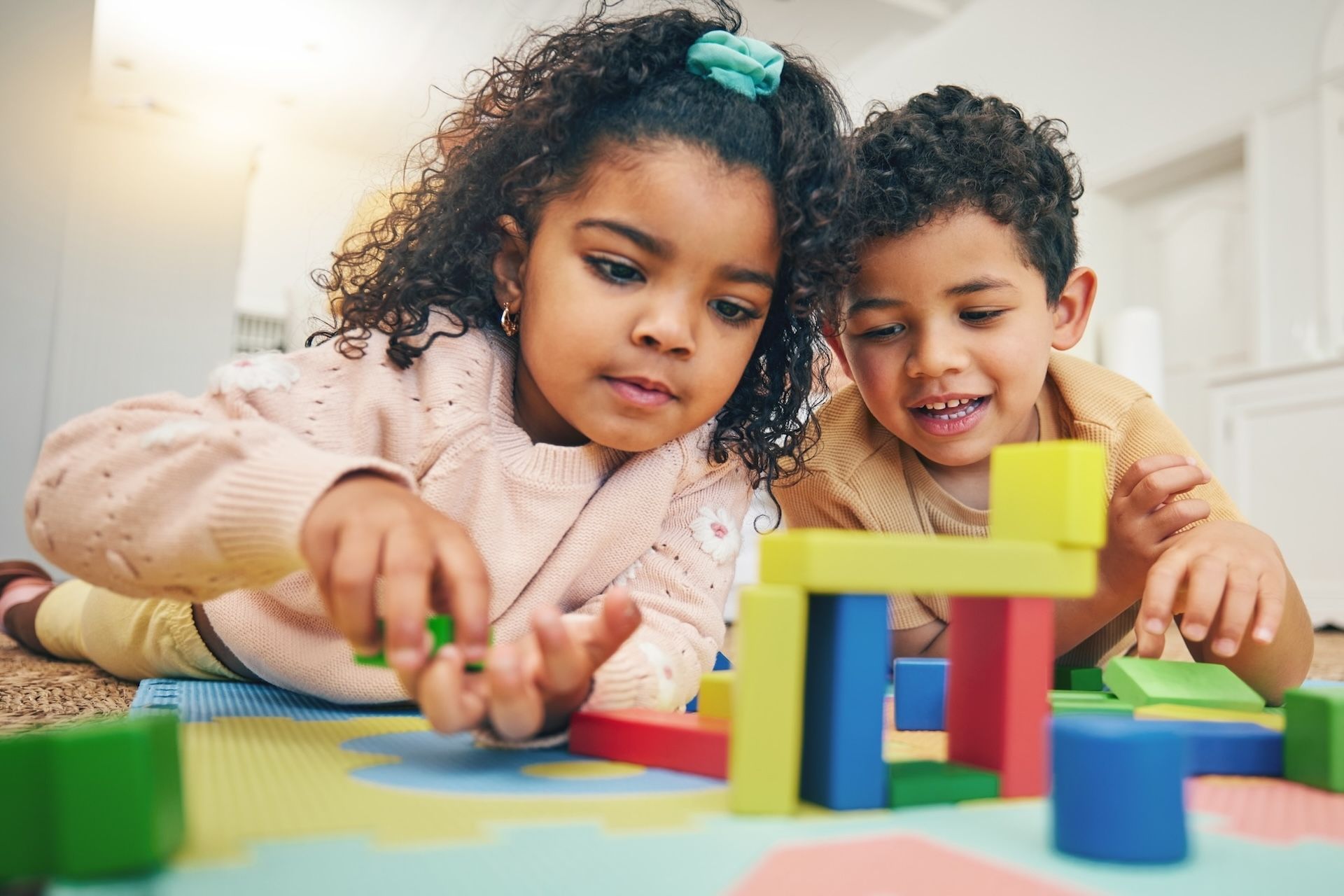
Children love to engage in pretend play, a self-generated form of fantasy. Often, in pretend play, children explore roles they see in real life by pretending to be in those roles. It’s pretend for them, but they are working out what different roles mean. Whether pretending to play school or house or creating a construction scene with excavators, this is young children’s way of processing the world around them. 


Where pretend play can become confusing for young children is when they have seen different kinds of fantastical things that seem real, such as Superman jumping off a building or a normal boy turning into Spiderman by being bitten by a spider. 


Young children are still distinguishing the line between fantasy and reality. It’s worth noting that even if our young children can repeat back that they know something is real or pretend, a true cognitive understanding of the difference doesn’t fully form until children developmentally shift into their elementary years. This is why we sometimes see children trying to get bitten by a spider so they can become Spiderman, or trying to jump off the top of the stairs so they can fly like Superman. 


As adults, we have a tremendous responsibility to allow children to create their own fantasy rather than imposing fantasy on them. For example, superheroes, fairy tales, and fictitious animated characters are adult-created fantasy. When we impose fantasy on our children, even if they like it, we are inadvertently depriving them of the opportunity to develop their own imagination. If children are in awe of adult-created fantasy, their creative expression often becomes more limited because they are trying to recreate something others have imagined.


The Real World is Amazing


From birth to about age six, children effortlessly absorb everything about the world. They are like sponges! This is the time when we want to introduce children to all sorts of exciting information. The options are almost limitless: species of mammals, names of flowers, land and water forms, countries in all the continents, types of clouds, pollinators, geometric solids, types of triangles, and the list goes on. 


Children are fascinated by the natural world. They gain so much inspiration from their sensory explorations and interactions in their environment. Neurologically, young children are developing mental order and categorization for all their future understanding. We want to give them real information so that they have a solid foundation for their imagination and creativity to truly soar. 


If we introduce children to fantastical, unreal things during the early years of their development, we divert their learning from what is amazing and wondrous about the world. In the process, we also create unnecessary confusion. For children who are still learning to discern the difference, the world of fantasy can be disorienting and even, at times, frightening.


As adults, we understand the difference between reality and fantasy, and there are times when we enjoy the diversion into the world of fantasy. For our youngest children, let’s give them the gift of building their understanding of the truly remarkable world around them. By doing so, we help them lay the foundation for a rich imaginative, and creative life. 


Curious to see more about how Montessori inspires creativity and imagination? Schedule a visit to our school. We’d love to connect with you!


Child at a classroom table arranging alphabet letters on a worksheet, with a box of letters nearby.
November 9, 2026
Discover how Montessori School of Louisville’s inclusive approach supports exceptional learners, offering differentiated instruction, self-correcting materials, and personalized pacing from Toddlers through Middle School.
Two children build the pink tower in a classroom, with chairs and tables in the background.
November 2, 2026
Discover how multi-age classrooms at Montessori School of Louisville nurture individual learning, strong relationships, and natural leadership from Toddlerhood through 8th Grade. Learn how our intentional groupings empower children to learn at their own pace and prepare for life.
October 26, 2026
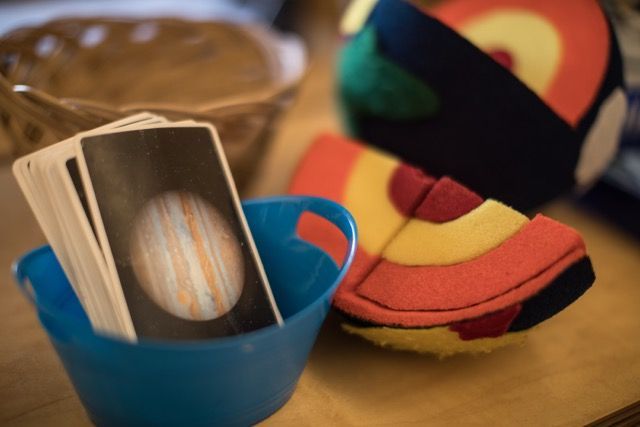
When Dr. Maria Montessori began developing her curriculum for elementary-aged children, she recognized that their educational needs undergo a profound transformation. Academic skills become more complex, but more importantly, the way content is delivered must fundamentally shift. In the elementary years (ages 6–12), children transition away from the sensory, hands-on physical boundaries of early childhood and move toward an expanding intellectual horizon. Around age six, a child’s scope of vision expands exponentially beyond themselves. Social connections become paramount, a vivid imagination awakens, and a deep curiosity takes hold regarding the universe, society, and their own place within the big picture. To meet this developmental leap, Dr. Montessori created Cosmic Education—a holistic framework that presents the story of the universe and humanity’s interconnected role within it. The Five Great Lessons: Springboards for Imagination At the heart of Cosmic Education are the Five Great Lessons. These are not intended to be exhaustive academic lectures; rather, they are dramatic, impressionistic stories designed to ignite the child's imagination and serve as a springboard for all future research and learning. Because children spend three years in each elementary community (Lower Elementary: ages 6–9; Upper Elementary: ages 9–12), they experience these lessons three distinct times. Each year, as their cognitive capacity grows, the lessons reveal deeper layers of meaning, sparking fresh, student-led exploration in chemistry, history, mathematics, language, and the sciences. Great Lesson 1: The Creation of the Universe Typically presented at the start of the school year, this lesson offers a captivating sense of wonder. Guides intentionally prepare the atmosphere: drawing the blinds, dimming the lights, and gathering children around a series of impressionistic materials and science experiments. The story begins in the vast, cold darkness before the universe existed, building up to the instantaneous moment of creation. Through striking demonstrations, children observe: How particles moved together and apart The speed of light and the immense scale of stars States of matter (solids, liquids, gases) The formation of the solar system, the cooling of the Earth, and volcanic activity Follow-Up Studies: This lesson serves as the gateway to physics, chemistry, astronomy, geology, physical geography, and the scientific method. Great Lesson 2: The Coming of Life As the school year progresses, attention shifts to how life emerged on Earth. To help elementary students grasp deep time, guides utilize impressionistic visual materials: The Long Black Strip: A long runner of black fabric representing Earth's vast lifespan, ending with a tiny sliver of white to represent all of human history. This material provides a humbling visual perspective on our planet's timeline. The Clock of Eras & The Timeline of Life: Colorfully illustrated charts detailing life’s evolution from single-celled organisms through early plants, invertebrates, vertebrates, and dinosaurs. Follow-Up Studies: Children dive into biology, Botany, Zoology, the five kingdoms of life, vertebrate classification, and paleontology through fossil studies. Great Lesson 3: The Coming of Humans This lesson introduces early human ancestors and the arrival of human consciousness. Children reflect on what makes human beings unique—our ability to think, reason, feel deeply, and collaborate to invent tools that solve complex problems. Guides introduce the Fundamental Needs of Humans, demonstrating how all people throughout history and across cultures share the exact same core requirements for survival and fulfillment (shelter, nourishment, clothing, defense, spiritual expression, and art). Follow-Up Studies: Ancient history, cultural anthropology, world geography, social studies, and human migration patterns. Great Lesson 4: The History of Mathematics Elementary students are fascinated to discover that mathematics was not created out of thin air, but was invented by ancient civilizations to solve real-world problems, like measuring land, trading goods, and tracking time. By learning about the contributions of the Babylonians, Egyptians, Greeks, Mayans, and early Indian mathematicians who developed the concept of zero, children realize that numbers are a shared human heritage. Follow-Up Studies: When children work through subtraction, long division, or geometry, they ground their practice in historical context, making abstract math deeply meaningful and engaging. Great Lesson 5: The History of Language Similar to the history of math, this lesson illuminates how written language evolved. From early cave paintings and Egyptian hieroglyphics to the Phoenician alphabet and the printing press, students learn how humans captured spoken thoughts to communicate across distance and time. Follow-Up Studies: Because elementary students are actively refining their reading, grammar, creative writing, and research skills, understanding the origin of words (etymology) inspires pride and curiosity in their literacy work. Experiencing Cosmic Education at MSL Cosmic Education gives children a sense of purpose and belonging. Instead of delivering isolated facts, Montessori presents the whole universe first, allowing students to see how every detailed subject connects back to the grand story of life. Would you like to observe our Lower and Upper Elementary classrooms in action and see Cosmic Education at work? Schedule a tour today!
More Posts