Our Montessori Bookshelf: For Summer Adventure
Montessori School of Louisville • July 8, 2024

Summer should be a time of adventure! Remember back to your own childhood, when summer days seemed to stretch on endlessly? Now, our children are so scheduled that they rarely get to navigate the neighborhood, traverse through the forest, or splash along a stream bank. Yet more and more research shows the importance of unstructured time in nature. 


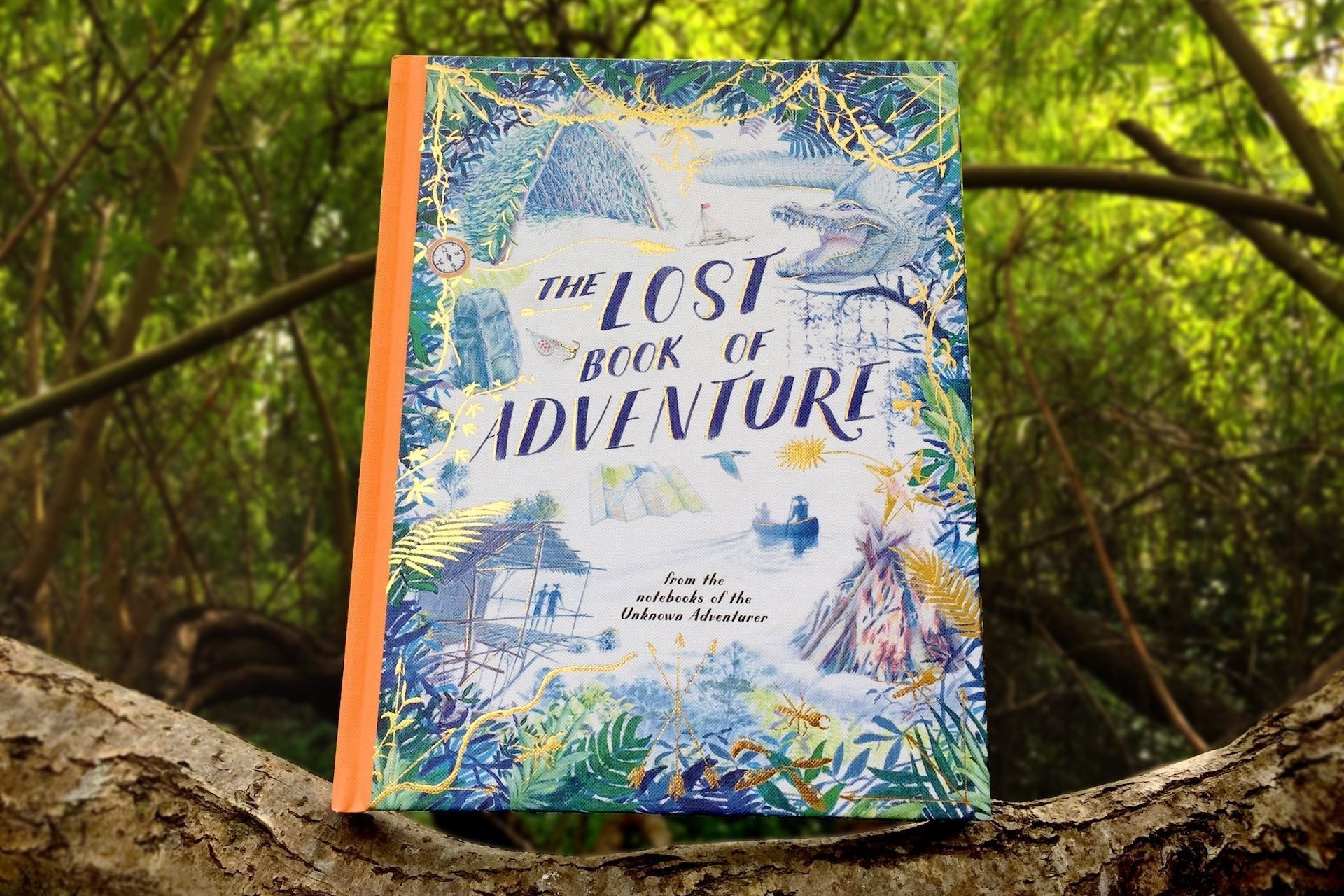
To encourage some summer outdoor adventure, we suggest settling in with your child to explore The Lost Book of Adventure from the notebooks of the Unknown Adventurer. Although this book is ideal for elementary ages and up, younger children can enjoy the illustrations and may even appreciate having adults read some of the snippets and sections scattered throughout the book. 


To begin, it’s worth noting that by design this book has a sense of mystery and magic to it. While it’s chock full of practical advice and stories from the field, The Lost Book of Adventure’s origin story is an invitation all on its own.

The compiler and editor of the book, Teddy Keen, was on his own adventure in a remote part of the Amazon when he came upon an abandoned shelter. Upon some investigation, he and his friends uncovered a rusty metal container. Inside the container was a slew of notebooks, journals, and sketchbooks – a compilation of some unknown person’s adventures, wonder, and knowledge from all around the world. According to the story, there was also a letter addressed to two young family members with a reminder: “Be good, be adventurous, and look after your parents.”


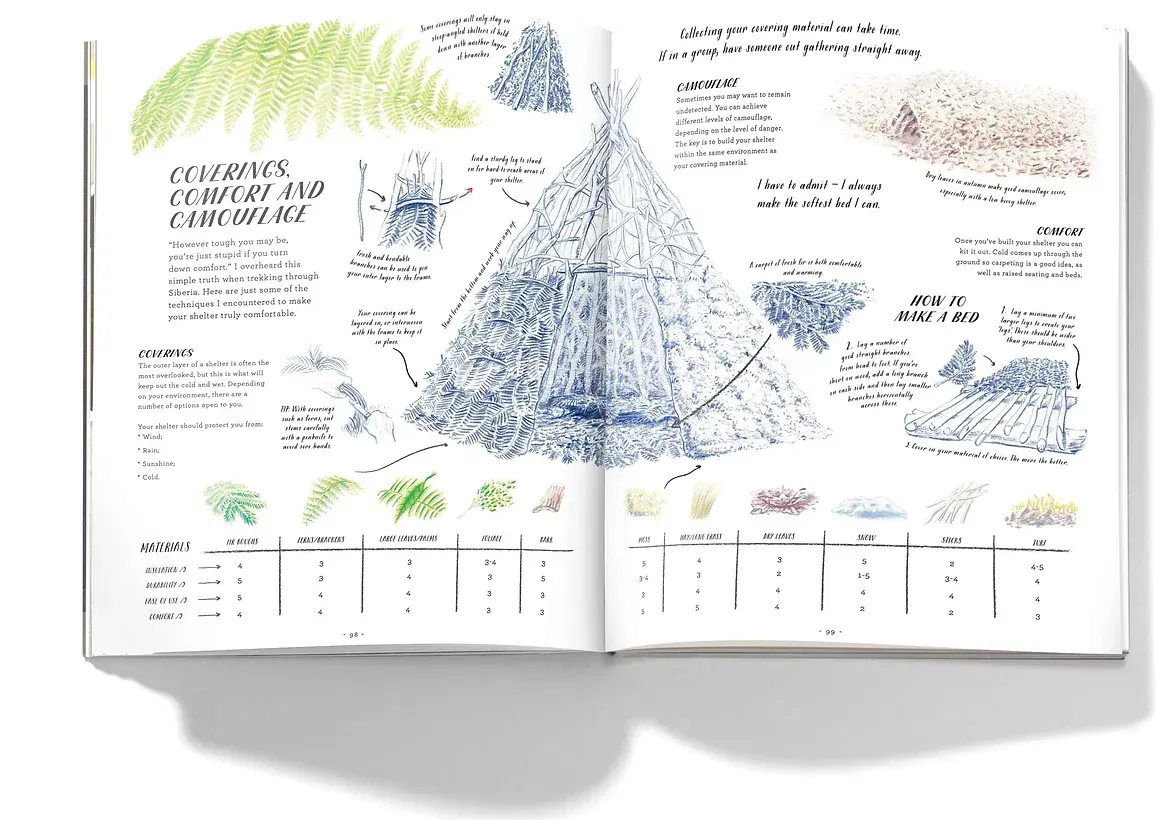
After years of restoration, compiling, and editing, The Lost Book of Adventure not only shares this unknown explorer’s beautiful (digitally remastered) artwork but also offers practical tips and invitations to begin your own adventures in your backyard.


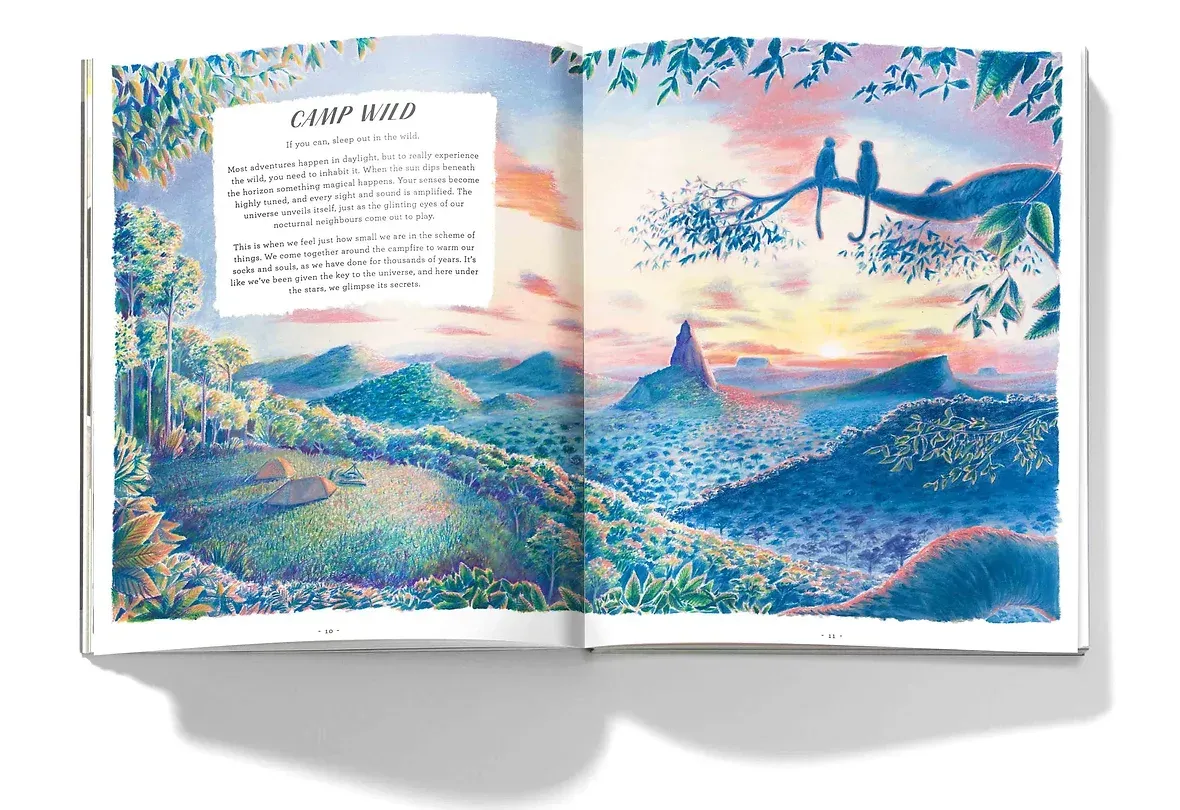
Although organized into thematic sections—camping, rafts and rafting, creating shelters, exploration, and general useful knowledge—the book is a kind of journey from cover to cover. It invites exploration of its pages. You want to discover the next illustration, caption, short narrative, or snippet of advice. 
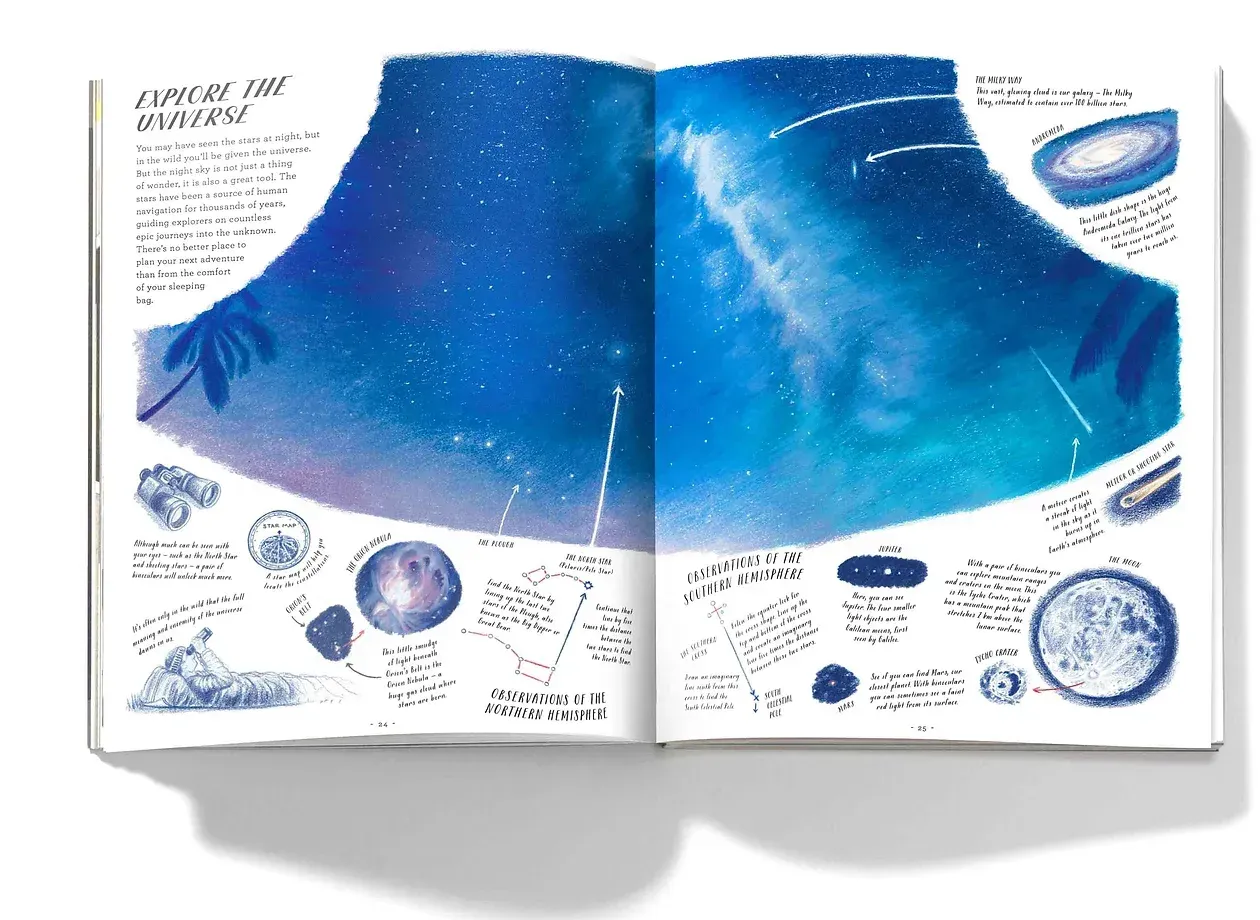

However, the book also serves as a kind of reference guide. How do you go to the bathroom in the woods? How can you make a bedsheet hammock? How do you climb a mountain? You can flip to just the content you need.


Woven throughout are little stories – from a sandstorm in the desert to a failed attempt to create a raft – that make the whole book accessible in a sweet and personal way. 


The effect is that adventure feels accessible. Yes, some of the anecdotes involve emperor penguins in Antarctica or a bike adventure through Africa. Yet somehow the book balances an allure with just enough concrete tips, tools, and tricks to make it all seem doable.

If you are interested in learning more, visit The Unknown Adventurer website. Above all, though, use this summer to create some little family adventures. If you need some ideas to get you started, we offer the list below (and this printable version).


See how many of these activities you can do with your child(ren) before the summer months slide by!


  • Climb a hill or a mountain. 
  • Explore a new hiking trail.
  • Walk, bike, or skate along a bike path.
  • Canoe or raft on a local river.
  • Explore a nature area near your house.
  • Climb a tree.
  • Learn how to use a compass and map to find your way.
  • Learn how to pitch a tent.
  • Learn how to make a fire.
  • Cook breakfast outdoors.
  • Make sandcastles on the beach.
  • Make mud pies.
  • Search for invertebrates in seaside rock pools or woodland streams.
  • Build a fort or lean-to in the woods.
  • Spend some hours making dams and bridges on little streams.
  • Try catching frogs.
  • Try catching fireflies in a jar.
  • Learn how to identify some constellations.
  • Find the North Star.
  • Learn where north, south, east, and west are in relation to your home.  
  • Watch the Perseid meteor shower (which peaks August 11-12).
  • Build a birdhouse. 
  • Ask someone to teach you how to whittle a piece of wood.
  • Name local birds in your neighborhood (use binoculars, bird songs, etc).
  • Learn the names of the trees on your property or in your area.
  • Collect something and make a little museum (e.g. shells, rocks, feathers, etc).
  • Keep a nature journal.
  • Dig for worms.
  • Go fishing.
  • Go for a night hike with a flashlight.
  • Pick fresh berries and bake a pie.

Two children build the pink tower in a classroom, with chairs and tables in the background.
November 2, 2026
Discover how multi-age classrooms at Montessori School of Louisville nurture individual learning, strong relationships, and natural leadership from Toddlerhood through 8th Grade. Learn how our intentional groupings empower children to learn at their own pace and prepare for life.
October 26, 2026
When Dr. Maria Montessori began developing her curriculum for elementary-aged children, she recognized that their educational needs undergo a profound transformation. Academic skills become more complex, but more importantly, the way content is delivered must fundamentally shift. In the elementary years (ages 6–12), children transition away from the sensory, hands-on physical boundaries of early childhood and move toward an expanding intellectual horizon. Around age six, a child’s scope of vision expands exponentially beyond themselves. Social connections become paramount, a vivid imagination awakens, and a deep curiosity takes hold regarding the universe, society, and their own place within the big picture. To meet this developmental leap, Dr. Montessori created Cosmic Education—a holistic framework that presents the story of the universe and humanity’s interconnected role within it. The Five Great Lessons: Springboards for Imagination At the heart of Cosmic Education are the Five Great Lessons. These are not intended to be exhaustive academic lectures; rather, they are dramatic, impressionistic stories designed to ignite the child's imagination and serve as a springboard for all future research and learning. Because children spend three years in each elementary community (Lower Elementary: ages 6–9; Upper Elementary: ages 9–12), they experience these lessons three distinct times. Each year, as their cognitive capacity grows, the lessons reveal deeper layers of meaning, sparking fresh, student-led exploration in chemistry, history, mathematics, language, and the sciences. Great Lesson 1: The Creation of the Universe Typically presented at the start of the school year, this lesson offers a captivating sense of wonder. Guides intentionally prepare the atmosphere: drawing the blinds, dimming the lights, and gathering children around a series of impressionistic materials and science experiments. The story begins in the vast, cold darkness before the universe existed, building up to the instantaneous moment of creation. Through striking demonstrations, children observe: How particles moved together and apart The speed of light and the immense scale of stars States of matter (solids, liquids, gases) The formation of the solar system, the cooling of the Earth, and volcanic activity Follow-Up Studies: This lesson serves as the gateway to physics, chemistry, astronomy, geology, physical geography, and the scientific method. Great Lesson 2: The Coming of Life As the school year progresses, attention shifts to how life emerged on Earth. To help elementary students grasp deep time, guides utilize impressionistic visual materials: The Long Black Strip: A long runner of black fabric representing Earth's vast lifespan, ending with a tiny sliver of white to represent all of human history. This material provides a humbling visual perspective on our planet's timeline. The Clock of Eras & The Timeline of Life: Colorfully illustrated charts detailing life’s evolution from single-celled organisms through early plants, invertebrates, vertebrates, and dinosaurs. Follow-Up Studies: Children dive into biology, Botany, Zoology, the five kingdoms of life, vertebrate classification, and paleontology through fossil studies. Great Lesson 3: The Coming of Humans This lesson introduces early human ancestors and the arrival of human consciousness. Children reflect on what makes human beings unique—our ability to think, reason, feel deeply, and collaborate to invent tools that solve complex problems. Guides introduce the Fundamental Needs of Humans, demonstrating how all people throughout history and across cultures share the exact same core requirements for survival and fulfillment (shelter, nourishment, clothing, defense, spiritual expression, and art). Follow-Up Studies: Ancient history, cultural anthropology, world geography, social studies, and human migration patterns. Great Lesson 4: The History of Mathematics Elementary students are fascinated to discover that mathematics was not created out of thin air, but was invented by ancient civilizations to solve real-world problems, like measuring land, trading goods, and tracking time. By learning about the contributions of the Babylonians, Egyptians, Greeks, Mayans, and early Indian mathematicians who developed the concept of zero, children realize that numbers are a shared human heritage. Follow-Up Studies: When children work through subtraction, long division, or geometry, they ground their practice in historical context, making abstract math deeply meaningful and engaging. Great Lesson 5: The History of Language Similar to the history of math, this lesson illuminates how written language evolved. From early cave paintings and Egyptian hieroglyphics to the Phoenician alphabet and the printing press, students learn how humans captured spoken thoughts to communicate across distance and time. Follow-Up Studies: Because elementary students are actively refining their reading, grammar, creative writing, and research skills, understanding the origin of words (etymology) inspires pride and curiosity in their literacy work. Experiencing Cosmic Education at MSL Cosmic Education gives children a sense of purpose and belonging. Instead of delivering isolated facts, Montessori presents the whole universe first, allowing students to see how every detailed subject connects back to the grand story of life. Would you like to observe our Lower and Upper Elementary classrooms in action and see Cosmic Education at work? Schedule a tour today!
Child in a bandana pours ingredients into a blender on a kitchen counter with bowls and drinks nearby
October 19, 2026
Discover how MSL’s Practical Life curriculum nurtures independence, motor refinement, and real-world executive functioning from Toddlers through Middle School.
More Posts