The Power of a Mirror and a Tissue
In their journey toward independence, one of the earliest and most meaningful steps children take is learning to care for themselves. In Montessori, this essential area of development is part of what we call Practical Life, which supports both physical and psychological growth.
A Prepared Environment for Self-Care
Montessori environments are intentionally designed to foster this growth. Everything is made accessible at the child's level: a sink they can reach, a faucet they can operate, and soap measured just right for a small hand. We carefully choose and arrange the materials to promote independence, order, and confidence.
We ensure that activities that may have once been done to children—like washing hands, brushing hair, or putting on a coat—can now be done by children, with increasing skill and pride. These seemingly simple tasks carry profound developmental weight, reinforcing our children’s self-concept and strengthening their ability to function with increasing autonomy.
Learning to Care for the Self: Wiping the Nose
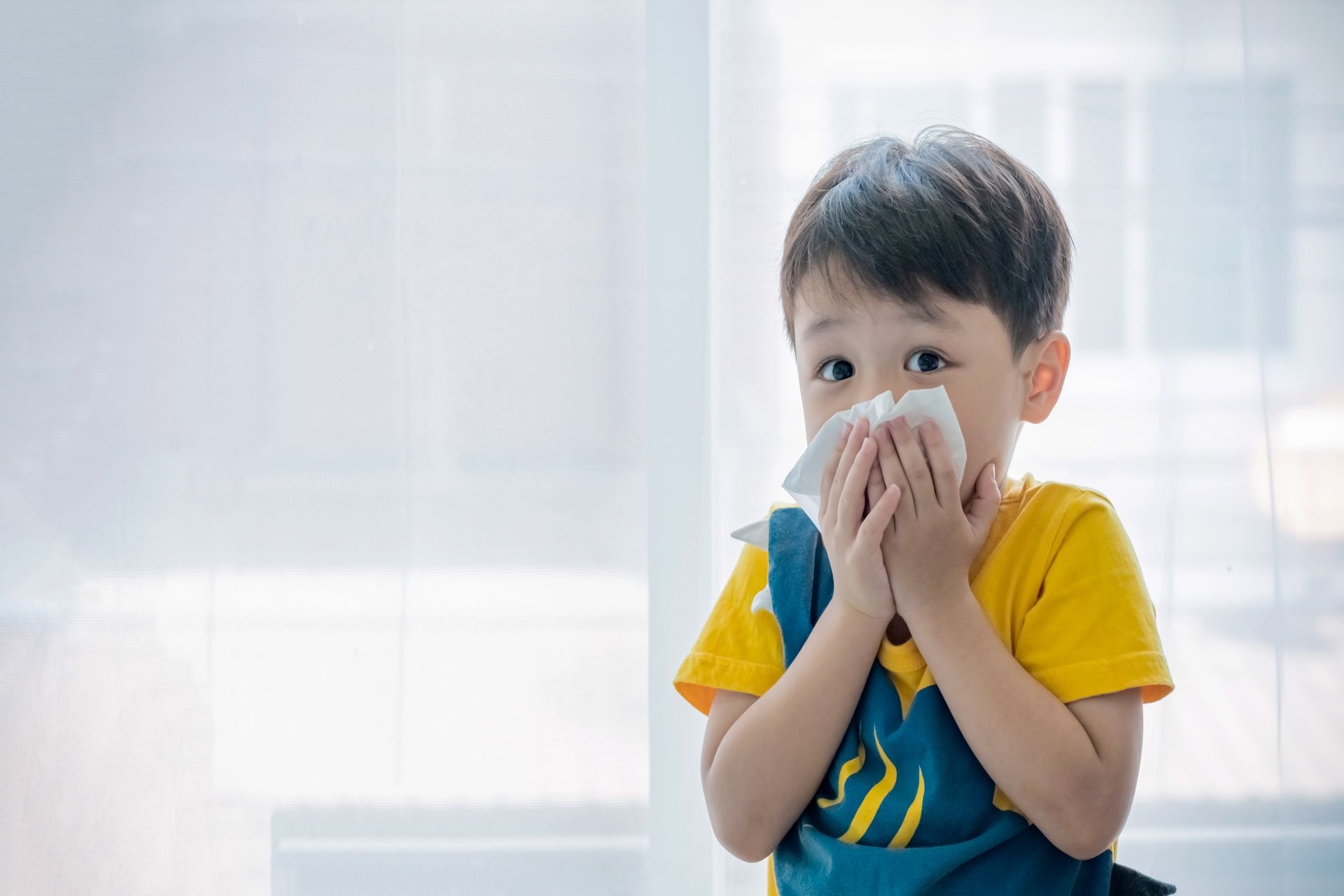
In the Montessori approach, even the simplest daily tasks are viewed as meaningful opportunities for children to build independence and confidence. One such task—often overlooked by adults but deeply empowering for children—is learning how to wipe their own nose.
This Practical Life activity is typically introduced around age one, or when a child enters a Montessori classroom. It is designed not only to support hygiene but also to encourage autonomy, intentional movement, and body care.
This activity can also be introduced at home!
A Prepared Environment for Self-Care
To support this important developmental step, first think about how to carefully prepare the environment:
- Set up a small basket or container that holds about 10 tissues, each folded in half. (During cold season, full-size tissues may be used for greater effectiveness.)
- Place a small trash can nearby for easy disposal.
- Have a mirror, either mounted or resting at the child’s height, to allow your child to observe their own face and movements.
- Store extra tissues nearby, either on a grooming table or supply shelf, to support repetition and independence.
This setup encourages children to move freely and participate fully in the process, fostering both confidence and coordination.
Step-by-Step: The Wiping Process
Next, we can model and provide gentle guidance:
- Invite your child to come to the mirror.
- Help them notice something on their nose and explain the purpose of the activity.
- Show the tissues and select one, unfolding it slowly and deliberately.
- Invite your child to select and open a tissue.
- Face the mirror and demonstrate how to place the tissue so each half forms a “tent” over the nose.
- Gently bring the tissue edges together and wipe upward and outward.
- Fold the tissue in half, then rotate it and repeat with the other side.
- Use the remaining clean section to dab gently under the nose.
- Dispose of the tissue in the trash.
- Invite your child to have a turn and, if needed, show the mucus on the tissue as a reference.
- Encourage repetition with a new tissue if their nose is not yet clean.
- Remind your child that they may wipe their nose anytime.
- Follow up with handwashing to reinforce cleanliness.
If your child has excessive mucus or needs a more thorough cleaning, you can also use pre-moistened wipes. We typically don’t introduce nose blowing until around age 2.5 to 3 to avoid the risk of ear infections.
When introducing this activity, it is helpful to consider its overarching purposes. First and foremost, learning how to wipe one’s own nose helps support independence and confidence. The process also helps children develop self-awareness and tools for self-care.
We can also highlight certain movements so our children achieve success. In Montessori, we call these “points of interest.” The key points of interest in this activity are:
- Watching their own movements in the mirror
- Observing the removal of mucus from their face
- The folding and unfolding of the tissue
- Practicing care not to touch the mouth during wiping
A Foundation for Independence & Self-Awareness
In Montessori, every Practical Life activity serves a deeper purpose. Even wiping the nose becomes a pathway to self-discovery, dignity, and joyful independence. By breaking down the steps and offering repeated, respectful invitations to participate, we give children the tools they need to become gracefully self-aware and independent!
Care of oneself is about far more than hygiene or appearance. These early experiences shape children’s understanding of their place in the world and prepare them to become responsible, confident, and independent human beings.
In Montessori, self-care is not a chore. Rather, it’s a celebration of children’s unfolding independence. Come visit our school to learn more about activities that cultivate children’s capability and self-respect.